Breadwinner and Citizen: How Working Fathers Are Refusing to Choose
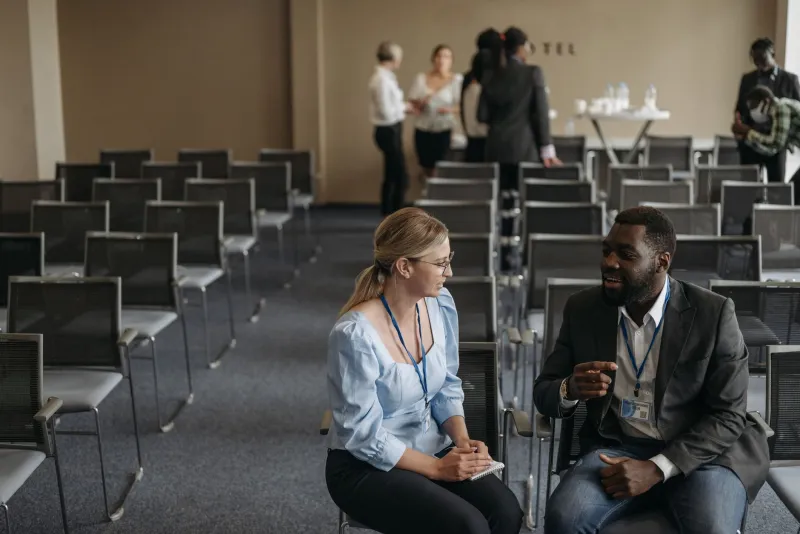
Martin Okafor leaves his house at 6:45 every weekday morning. He manages a regional logistics team in Columbus, Ohio, oversees two teenage sons with his wife, and somehow chairs the neighborhood association's infrastructure committee. When asked how he manages it all, he pauses before answering—not because he lacks a response, but because the question itself frustrates him.
"People act like caring about your block means you've given up on your career," he says. "I don't accept that framing."
Okafor is not exceptional. Across the country, working fathers are quietly dismantling the false binary that has long defined male civic identity in America: that you can either build a career or build a community, but not both. At Join 1 Million Men, we hear this tension described constantly—in letters, in local chapter meetings, in conversations that begin with "I want to do more, but..."
The "but" is worth examining honestly. Because behind it lies not laziness or indifference, but a genuine structural problem that deserves a serious answer.
The Real Cost of the Either/Or Myth
For decades, cultural messaging directed at men has reinforced a stark hierarchy of obligation: provide first, participate second. The working father who skips a city council meeting to finish a quarterly report is not making a moral failure—he is responding rationally to incentives that reward professional output and offer little formal recognition for civic contribution.
But the consequences of that calculation accumulate. When men in their thirties and forties—precisely the demographic with the experience, resources, and community stakes to drive meaningful civic change—disengage from local governance, school boards, neighborhood associations, and volunteer organizations, the institutions those bodies serve weaken. The vacuum rarely goes unfilled; it simply gets filled by others, often those with narrower interests or less accountability to the broader community.
Dr. Renata Simmons, a sociologist who studies male civic behavior at a Midwestern research university, puts it plainly: "The men most capable of sustained civic leadership are often the ones who've convinced themselves they've earned the right to opt out. Career success becomes its own justification for withdrawal."
That withdrawal has a compounding effect. When fathers are absent from civic life, their children observe that absence. The lesson transmitted—however unintentionally—is that public engagement is someone else's responsibility.
What Working Fathers Are Actually Doing
The men who have cracked this challenge tend not to have discovered more hours in the day. They have, instead, made deliberate architectural decisions about how their time is structured.
Derek Fontaine, a software engineer and father of three in Atlanta, serves on the board of a nonprofit that provides after-school programming in underserved neighborhoods. His secret, if it can be called that, is radical specificity. "I said yes to one thing and no to everything else for two years," he explains. "I didn't spread myself across five causes. I went deep on one."
This principle—depth over breadth—appears repeatedly among men who sustain long-term civic involvement without professional burnout. Rather than attending every community meeting or joining every initiative that crosses their inbox, they identify a single point of leverage and commit to it seriously.
For James Whitmore, a contractor and youth baseball coach in suburban Phoenix, integration rather than addition was the key shift. "I stopped thinking of coaching as something I did instead of work," he says. "It's part of how I show up as a man in this community. It's not separate from my identity—it is my identity."
Whitmore's framing reflects something important: civic engagement does not have to be an appendage bolted onto a full life. For many men, the most sustainable forms of involvement are those woven directly into existing routines—coaching a team connected to their child's school, joining a professional association that also does community advocacy, mentoring a younger colleague while simultaneously introducing him to neighborhood leadership.
The Employer Equation
One dimension of this conversation that receives insufficient attention is the role of employers. A small but growing number of American companies have begun formalizing civic engagement as part of their employee value proposition—offering paid volunteer hours, flexible scheduling around election days or community board meetings, or formal recognition of civic service in performance reviews.
Men who work for these organizations report significantly lower tension between professional and civic obligations. The signal from leadership matters: when a manager acknowledges that an employee's work on a school facilities committee reflects leadership qualities relevant to his professional role, the psychological cost of civic involvement drops considerably.
For men whose employers have not yet adopted such policies, the ask is worth making. Several members of our national network have successfully negotiated flexible scheduling arrangements precisely by framing civic involvement in terms their employers already valued—leadership development, community relations, stakeholder engagement.
Practical Architecture for the Dual Life
For men standing at this crossroads, several frameworks have proven consistently useful.
Define your civic lane. The most effective working fathers in civic life are those who have answered, clearly and specifically, the question: What problem in my community am I best positioned to address? Generic volunteerism produces generic results. Specific expertise applied to specific problems produces change.
Protect your margins. Sustainable civic engagement rarely comes from carving time out of the middle of an already full schedule. It comes from protecting the edges—early mornings, lunch hours, one evening per week—and treating that time with the same discipline applied to professional commitments.
Build in accountability. Men who show up consistently for civic obligations are almost universally those who have made those obligations visible to someone else. A spouse who knows about the board meeting, a colleague who asks about the neighborhood association project, a peer in a civic network who expects your presence—external accountability converts good intentions into reliable behavior.
Let your kids see the work. Several fathers interviewed for this piece described bringing their children to community meetings, volunteer projects, or civic events—not as a parenting strategy, but as a natural extension of their own involvement. The byproduct, they noted, was that their children began to understand civic participation as a normal feature of adult male life, not an extraordinary sacrifice.
The Larger Stakes
The tension between career and civic life is real. It would be dishonest to pretend otherwise, or to offer five easy steps that dissolve a genuine structural challenge. Working fathers face legitimate demands on their time, and the culture has not always made civic engagement easy to prioritize.
But the men gathering under the banner of Join 1 Million Men are not looking for easy. They are looking for a framework—a way of understanding their obligations to family, profession, and community that does not require them to amputate one to serve the others.
Martin Okafor, back in Columbus, offers perhaps the most direct version of that framework: "My sons are watching me figure out what kind of man to be. I want them to see someone who works hard and gives a damn about where he lives. That's not a contradiction. That's the whole point."
One million men who believe that. One nation that needs them to act on it.