The Mic Is Closer Than You Think: A Working Man's Field Guide to Public Comment
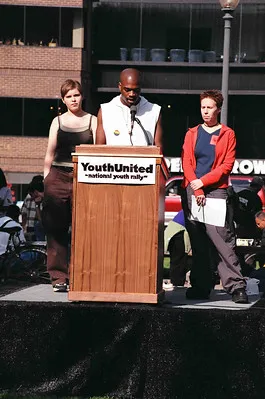
Photo: Elvert Barnes, CC BY 2.0, via Wikimedia Commons
Somewhere in your town this week, a public body will open a microphone to anyone who walks in. No appointment. No credential. No fee. In most American municipalities, the public comment period is a guaranteed slot of time—usually one to five minutes per speaker—during which the people who own the government get to address the people who run it.
Most men never use it. Not because they lack opinions, but because the room is unfamiliar, the procedure is unspoken, and nobody ever explained the mechanics. Consider this the explanation.
Before You Go: The Thirty-Minute Homework
Public bodies post their agendas online, usually several days ahead. Read the agenda for the meeting you plan to attend and find the item that concerns you. Note its number. Speakers who reference a specific agenda item are taken more seriously than speakers who deliver general grievances, because their comments become part of that item's official record.
Check the rules, too. Most bodies require sign-up before the meeting begins—often a paper sheet at the door or a form on a tablet. Some limit comments to three minutes; some to two. Knowing the limit in advance is the single best defense against nerves.
The Script That Works
There is no required format, but decades of observed testimony suggest a structure that boards respond to:
Opening (10 seconds). "Good evening. My name is [name], I live on [street or neighborhood], and I'm here about agenda item [number]."
The point (60–90 seconds). One issue. Not three. State your position plainly: "I'm asking the board to vote no on the rezoning" or "I'm asking you to restore funding for the crossing guard program." Then give one reason, ideally with one fact attached—a number, a date, a personal observation.
The close (10 seconds). "I appreciate your time and your service. I'd be glad to answer questions."
Write it out. Rehearse it aloud twice. A spoken three minutes is roughly 400 words; time yourself, because most first-timers write twice what they can deliver.
Body Language and Nerves
The physiological truth about public speaking is that the fear peaks in the thirty seconds before you begin and collapses shortly after. A few practical measures help:
- Bring your notes. Reading from paper is completely acceptable and far better than rambling.
- Look at the clerk or a friendly face in the audience, not the whole room.
- Plant your feet. Keep your hands on the podium or at your sides. Nervous energy drains downward, not outward.
- Speak slightly slower than feels natural. What sounds ponderous to you sounds composed to everyone else.
- If your voice shakes, keep going. Nobody in the room is grading it.
From the Men Who Kept Coming Back
A warehouse supervisor in Ohio described his first comment as "ninety seconds of pure panic." He returned the next month, then the next. By his fourth appearance, a council member sought him out before the meeting to ask his view on an upcoming vote. "They know my name now," he said. "That took about a year. It cost me twelve evenings."
A retired mechanic in Texas put it differently: "The first time I spoke, I figured somebody would shout me down. Instead the mayor thanked me. I'd built it up into a fight. It's not a fight. It's a conversation where they have to let you finish."
Both men report the same pattern: the second time is half as hard, the third time is easy, and somewhere around the fifth, the dynamic inverts. The board begins listening for you.
What Your Minutes Are Worth
Comments made during public periods go into minutes that staff must review. A well-argued, specific, calm testimony can redirect a staff report, stall a bad proposal, or put an ignored problem on the next agenda. It is the most direct—some would say the only guaranteed—channel between a private citizen and a public decision.
The barrier, in the end, is smaller than it looks: an agenda read at the kitchen table, a script on an index card, seven minutes at a microphone with your name attached. Multiply that by a million men and the quiet rooms of local government stop being quiet at all.