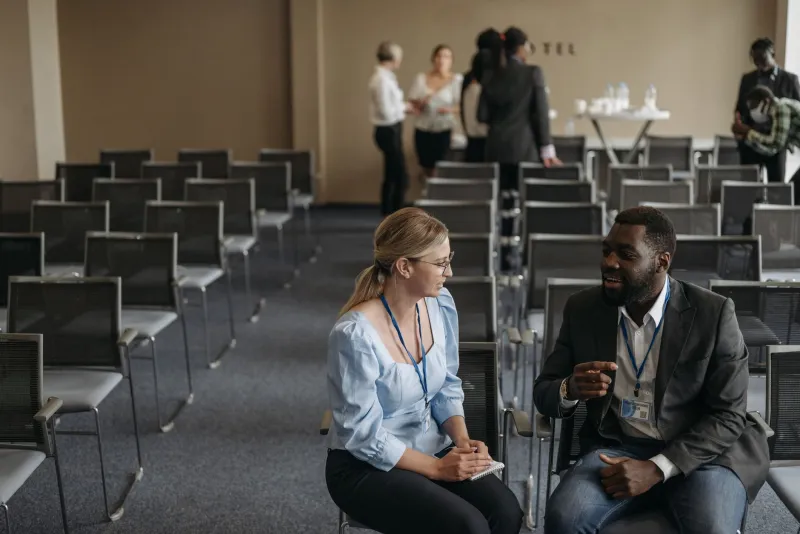
Fathers in the Hallway: Why Men Must Claim Their Seat in PTA Leadership Before It's Too Late

Walk into almost any Parent-Teacher Association meeting in the United States on a Tuesday evening, and you will notice something immediately. The room is full. Parents are engaged, taking notes, raising hands. But look more carefully at who is seated at the leadership table — who runs the agenda, who chairs the budget committee, who votes on curriculum proposals — and a stark pattern emerges. The men are largely absent.
This is not anecdote. It is documented reality. National surveys consistently show that men hold fewer than 20 percent of PTA leadership roles across the country, despite fathers comprising approximately half of the parent population in American households. That gap — thirty percentage points wide — does not represent a minor statistical quirk. It represents a structural failure with measurable consequences for every child sitting in a classroom today.
What the Numbers Actually Mean
Understanding the scope of this imbalance requires moving beyond raw percentages. PTA leadership is not ceremonial. These are the individuals who negotiate directly with school principals on resource allocation, who advocate to district boards for after-school programming, who shape the committees that review curriculum materials, and who organize the fundraising drives that supplement — and in many underfunded districts, effectively replace — state budget line items.
When one demographic group controls those conversations, the priorities of the other group go unvoiced. Research from the National School Boards Association and independent education policy groups has repeatedly found that schools with more gender-balanced parent leadership report broader extracurricular offerings, stronger STEM programming for both boys and girls, and higher rates of parental satisfaction across the board. The correlation is not coincidental.
Fathers who do participate in PTA leadership frequently report that their presence shifts the conversation in ways that benefit all students. Marcus Tillman, a father of two in Columbus, Ohio, who joined his elementary school's PTA board three years ago, describes the experience plainly: "Before I joined, the budget meetings never once discussed the school's physical education equipment or the shop class funding. Those programs were on the chopping block every year. Once I was in the room, we started having different conversations. Not because I was fighting for boys specifically — but because I was raising questions nobody else had thought to raise."
The Obstacles Are Real, Not Imagined
It would be convenient to dismiss male absence from PTA leadership as simple disinterest. The evidence does not support that conclusion. Interviews with fathers across a range of demographic backgrounds reveal a consistent set of systemic obstacles that discourage participation before it ever begins.
The first is scheduling. PTA meetings are overwhelmingly held during weekday evenings or weekend mornings — times that conflict directly with the work schedules disproportionately held by men in dual-income households and with the sole-earner obligations carried by many fathers. The implicit message, even if unintentional, is that these spaces were designed for those with more flexible daytime availability.
The second obstacle is cultural signaling. Many fathers describe arriving at their first PTA meeting and encountering an environment — in décor, in communication style, in the unspoken social dynamics of the room — that felt distinctly unwelcoming. This is not a complaint about hostility. It is an observation about belonging. When a space has been shaped over years by a homogenous group, it naturally reflects the preferences and norms of that group. Men who enter feel the friction of that misalignment and often do not return.
The third obstacle is the absence of visible male models. Derek Huang, a father in Sacramento who now chairs his school district's parent advisory council, recalls his early hesitation: "I didn't see anyone who looked like me in those roles. It's the same reason we talk about representation in any field. If you never see yourself reflected in a space, you assume the space isn't for you."
What Happens When Men Do Show Up
The schools where fathers have broken through the participation barrier offer a compelling counter-narrative. In Raleigh, North Carolina, a group of eight fathers organized a coordinated push to join their children's school PTA in 2021. Within two years, male membership on the executive board had risen from one to four. The school's budget that year saw the first allocation in a decade toward updated vocational training equipment. Attendance at school events increased by 22 percent, driven in part by other fathers who said they felt more comfortable participating once they saw peers involved.
This is the multiplier effect that civic engagement theory predicts and that community organizers have long understood. Representation invites representation. When men see other men leading, the psychological barrier lowers. The first father through the door makes it easier for the second. The second makes it easier for the tenth.
The same dynamic operates at the policy level. Male voices in PTA leadership have been credited with pushing back on budget proposals that would have eliminated recess, advocating for school safety infrastructure improvements, and securing funding for mental health counselors in districts where male students were disproportionately underserved. These are not partisan victories. They are outcomes that serve every family.
Concrete Steps for Men Ready to Act
The path forward does not require a dramatic reinvention of how PTAs operate. It requires men to make a deliberate decision to enter spaces they have long avoided and to stay long enough to change them.
For fathers considering the step, several strategies have proven effective:
Show up consistently before seeking a role. Attend three or four general meetings as a participant before pursuing a leadership position. Build relationships. Understand the existing dynamics. Arrive as a contributor, not a challenger.
Recruit one other father. The discomfort of entering an unfamiliar civic space diminishes considerably when you are not alone. Identify a neighbor, a colleague, or a friend whose child attends the same school and commit to attending together.
Raise scheduling concerns through proper channels. If meeting times create structural barriers for working fathers, propose alternatives formally. Frame the request as a diversity and inclusion issue — because it is one.
Pursue committee roles before board roles. Budget committees, curriculum review panels, and facilities subcommittees are where meaningful decisions are made. These are often easier entry points than executive board positions and carry significant influence.
Connect with national resources. The National PTA has made efforts in recent years to address gender imbalance in parent leadership. Their resources, combined with the growing network of civic-minded fathers organizing through platforms like Join 1 Million Men, provide both guidance and community.
The Larger Stakes
The question of male involvement in PTA leadership is not, at its core, a question about organizational demographics. It is a question about whether the institutions that shape our children's futures will reflect the full range of voices invested in those futures.
America's schools are navigating extraordinary pressures — funding shortfalls, curriculum debates, mental health crises, and workforce preparation challenges that will define the next generation's prospects. These decisions deserve the broadest possible base of engaged, informed parent leadership.
Men who remain in the hallway — present in body but absent from the table — are not neutral observers. Their silence is a vote for the status quo. And the status quo, as the data clearly shows, is not serving our children as well as it could.
One million men committing to civic engagement means nothing if that commitment stops at the school parking lot. The meeting is already in session. The seat is empty. It is time to walk through the door.