Building Builders: Men Who Are Cultivating the Next Wave of Civic Leaders

Photo: Ganesh Mohan T, CC BY-SA 4.0, via Wikimedia Commons
The Leadership Vacuum No One Is Officially Talking About
Every election cycle, political analysts bemoan voter apathy. Every municipal budget season, city council chambers sit half-empty. School board meetings, neighborhood association gatherings, zoning hearings—the venues of local democracy are chronically understaffed with engaged citizens, particularly young ones.
The conventional response is to encourage participation. Get out the vote. Attend the meeting. Write the letter. These are worthy calls to action, but they address only the surface of a deeper structural problem: most young Americans have never been taught how civic systems actually work, and they have never had a guide to walk them through the experience of engaging those systems for the first time.
A growing cohort of American men has identified this gap and decided to fill it—not by running for office themselves, but by deliberately cultivating the civic capacity of the generation coming up behind them. Their methods vary. Their communities span geography, race, and political tradition. But their underlying conviction is the same: the health of American democracy depends on whether ordinary citizens take responsibility for developing other citizens.
What Grassroots Leadership Development Actually Looks Like
In Macon, Georgia, Marcus Holloway spent twelve years working as a city parks administrator before concluding that the young men in his neighborhood needed something the school system was not providing. In 2019, he launched the Bibb County Civic Fellows program, a ten-week initiative that walks high school juniors and seniors through the mechanics of local government—how budgets are drafted, how zoning decisions are made, how public comment periods function, and how individual residents can influence outcomes they care about.
"Most of these young men had never been inside City Hall," Holloway explained in a recent interview. "Not because they didn't care about their neighborhood. But because no one had ever told them that City Hall was a place where they had standing."
The Civic Fellows program now operates in two additional Georgia counties and has produced alumni who have gone on to serve on neighborhood advisory boards, run for student government in college, and, in two cases, successfully lobby the state legislature for funding changes that directly affected their communities.
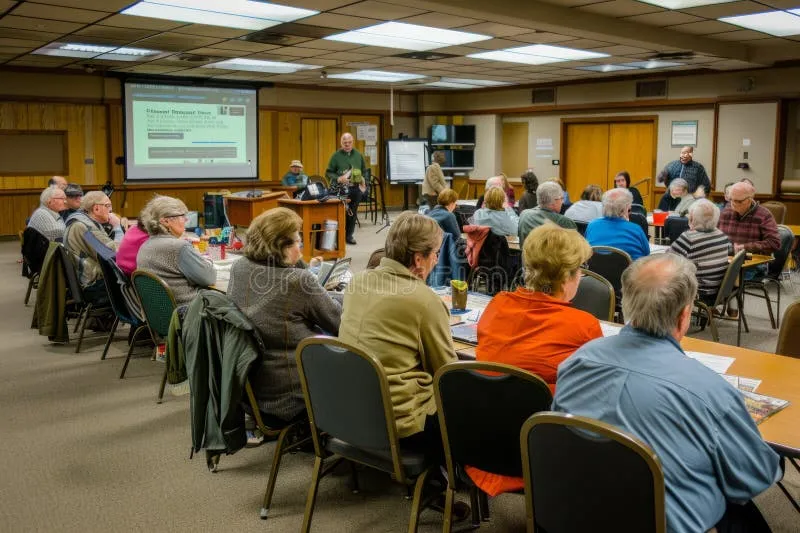
In Minneapolis, a former union organizer named David Reyes took a different approach. Frustrated by what he saw as the civic disengagement of men in his professional network, he convened what he called a "civic boot camp"—a weekend intensive modeled loosely on leadership training programs used in labor organizing, adapted for a broader audience. Participants spent two days learning parliamentary procedure, public speaking, coalition building, and the basics of running a community meeting.
"I wanted to demystify the process," Reyes said. "A lot of men stay on the sidelines not because they lack passion but because they feel like they don't know the rules. Once you understand the rules, the game becomes a lot less intimidating."
His boot camp, now offered twice annually, has trained more than 200 men since 2020. A significant portion of those men have gone on to take formal leadership roles in civic organizations, school boards, and local advocacy groups.
The Architecture of Effective Programs
While the specific formats vary, the most successful civic leadership development initiatives share several structural characteristics.
Experiential learning over lecture. Programs that produce lasting civic engagement do not rely primarily on classroom instruction. They put participants into real civic settings—attending actual public meetings, drafting actual letters to elected officials, participating in actual community planning processes—and debrief those experiences afterward. The learning is anchored in lived engagement, not abstract principle.
Sustained cohort relationships. One-time workshops produce limited results. Programs that structure participants into cohorts—groups that learn together over multiple sessions and maintain ongoing relationships—generate significantly stronger outcomes. The peer accountability and social identity that develop within cohorts sustain engagement long after the formal program ends.
Explicit connection to local power structures. Effective programs do not teach civic engagement in the abstract. They map the specific power structures of the communities they serve, identifying the actual decision-makers, the actual pressure points, and the actual pathways through which ordinary citizens can influence outcomes. This local specificity is what converts general civic knowledge into actionable capacity.
Mentorship as a structural element. The most durable programs pair participants with experienced civic actors who provide ongoing guidance beyond the formal curriculum. This mentorship layer transforms the program from a training event into a sustained developmental relationship.
Obstacles These Men Have Navigated
Building grassroots civic infrastructure is not without friction. The men leading these initiatives have encountered a consistent set of challenges.
Funding is the most immediate. Unlike established nonprofits with development staff and donor networks, grassroots programs typically operate on minimal budgets, relying on founder energy and in-kind contributions. Several program leaders interviewed for this article described spending their own money to cover basic operational costs in their early years.
Institutional skepticism is another persistent obstacle. Schools, municipal agencies, and established civic organizations do not always welcome new entrants into the civic education space, particularly those operating outside formal credentials or institutional affiliations. Building trust with gatekeepers requires patience and a willingness to demonstrate results before demanding recognition.
Sustaining volunteer capacity is a third challenge. Programs built on the personal commitment of a founding individual are inherently fragile. The men who have built the most durable programs have invested heavily in developing leadership within their participant cohorts, deliberately identifying and cultivating successors who can carry the work forward independently.
A Toolkit for Replication
For men at Join 1 Million Men who are ready to build something in their own communities, the experience of these program leaders suggests a practical starting framework.
Start with a clear problem statement. Define specifically what civic capacity is missing in your community. Is it knowledge of how local government works? Is it the absence of organized forums for young men to engage civic questions? Is it the lack of connection between motivated individuals and existing civic organizations? Clarity about the problem shapes everything that follows.
Map your existing assets. Before building anything new, inventory what already exists. Local libraries, community foundations, faith institutions, and civic organizations often have underutilized resources—meeting space, small grants, volunteer networks—that can be recruited in support of a new initiative.
Recruit a small founding cohort. Do not attempt to launch a program alone. Identify three to five other men who share your commitment and are willing to invest time in co-designing the initiative. A founding cohort distributes both the labor and the risk, and it models the collaborative leadership you intend to develop in participants.
Run a pilot before scaling. Begin with a small, manageable cohort—ten to fifteen participants—and treat the first iteration as a learning experience rather than a finished product. Document what works, what does not, and what you would do differently. Use that documentation to refine the model before expanding it.
Connect to national networks. Organizations like the National League of Cities, the Knight Foundation's civic engagement portfolio, and MENTOR's leadership development resources offer both knowledge and potential funding connections for locally-rooted civic programs.
The Obligation of Those Who Know How
There is a particular responsibility that falls on men who have navigated civic systems successfully—who have run for local office, organized a community response to a neighborhood challenge, or simply learned how to make their voice heard in the rooms where decisions are made. That responsibility is transmission.
Civic knowledge is not inherently democratic in its distribution. It flows through networks of relationship, through families with traditions of public engagement, through communities with institutional memory. Men who have access to that knowledge and choose to keep it to themselves are, in effect, hoarding a public resource.
Building the next generation of civic leaders is the most direct way to democratize that resource. It is also, ultimately, the most effective form of civic engagement a man can practice—not because it amplifies his own voice, but because it multiplies the number of voices capable of shaping the communities we all share.
One million men. Each one building one more.