No Campaign Required: Five Proven Pathways for Men Who Want Real Civic Power
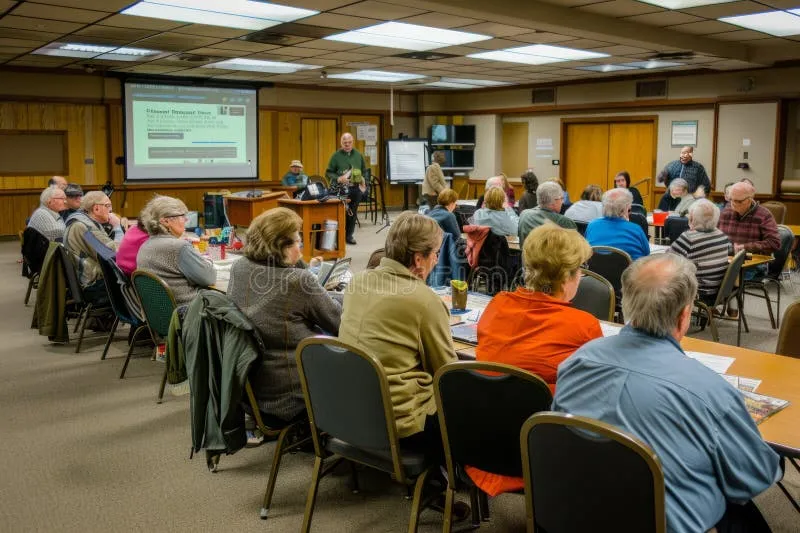
Photo: men community meeting city hall civic discussion panel, via thumbs.dreamstime.com
Let us dispense with a persistent myth: that meaningful political power in the United States flows only through elected office. It does not. The decisions that most directly affect American life—zoning ordinances that determine where housing gets built, school curriculum standards, local budget allocations, land use plans, public health regulations—are shaped every day by people whose names appear on no ballot. They serve on appointed boards. They testify at public hearings. They build relationships with decision-makers. They organize constituents into coherent, persuasive coalitions.
They are, in short, engaged citizens who chose to move from the bleachers to the field without ever filing a single campaign finance disclosure.
At Join 1 Million Men, we believe that civic power is not a scarce resource reserved for the politically ambitious. It is a distributed capacity that belongs to anyone willing to invest the time and effort to exercise it. What follows are five proven, accessible pathways through which men can exert genuine influence over the policies and institutions that govern their communities—starting this month.
1. Serve on a Local Appointed Board or Commission
Every incorporated municipality in the United States maintains a roster of advisory and decision-making bodies that require citizen members. Planning and zoning commissions. Library boards. Parks and recreation committees. Historic preservation commissions. Ethics oversight panels. Budget advisory councils. These bodies meet regularly, issue formal recommendations, and in many cases hold binding authority over consequential local decisions.
The application process for most of these positions is straightforward: a letter of interest, sometimes a brief interview with a mayor's office or city council member, and a willingness to commit to regular attendance. Vacancies are common, and qualified applicants—particularly men from underrepresented neighborhoods or professional backgrounds—are frequently welcomed.
The impact is immediate and concrete. A man serving on a local planning commission participates directly in decisions about development, infrastructure, and land use that will shape his community for decades. A seat on a school curriculum committee provides direct influence over what the next generation learns. These are not peripheral roles.
Action step: Contact your city or county clerk's office this week and request a list of boards and commissions with current or anticipated vacancies. Identify one that aligns with your professional expertise or community priorities, and submit a letter of interest within thirty days.
2. Build a Sustained Relationship with an Elected Official
Elected officials at the local level—city council members, county commissioners, state legislators—are frequently more accessible than their counterparts at the federal level, and they operate with far less insulation from constituent input. A man who makes the effort to introduce himself, attend town halls consistently, and follow up on specific issues becomes, over time, a recognizable and valued voice in that official's decision-making environment.
This is not a transactional relationship built on donations or party affiliation. It is a civic relationship built on demonstrated knowledge, reliability, and community credibility. Officials who know that a constituent has deep roots in a particular neighborhood, understands a specific policy domain, or represents a broader network of engaged citizens will consult that constituent when relevant decisions arise.
The key is consistency. A single meeting produces an introduction. Ten meetings over eighteen months produce influence.
Action step: Identify your city council representative and your state house district representative. Attend one public event where each is present in the next sixty days. Introduce yourself, identify one specific issue you care about, and request a brief follow-up conversation. Then follow through.
3. Organize a Stakeholder Coalition Around a Specific Issue
Individual voices carry weight. Organized voices carry authority. One of the most effective—and underutilized—forms of civic power available to ordinary citizens is the formation of a stakeholder coalition: a structured group of residents, business owners, organizational leaders, and community members who share a common concern and present it to decision-makers with a unified position.
Coalitions work because they solve a fundamental problem for elected officials and appointed administrators: the problem of knowing what constituents actually want. A petition signed by 400 residents of a specific neighborhood tells a school board member something that no individual meeting can convey. A coalition of fathers, business owners, and faith leaders testifying collectively at a city council hearing on park funding carries a different weight than any single voice.
Building a coalition does not require a nonprofit charter or a professional organizer. It requires identifying shared concerns, convening people around them, and maintaining enough organizational coherence to show up together when decisions are being made.
Action step: Identify one local policy issue—school funding, infrastructure, public safety, housing development—that concerns you and at least a handful of your neighbors. Host an informal meeting of ten to fifteen people. Establish a shared communication channel. Assign one person to track upcoming decision points. You now have the foundation of a coalition.
4. Testify at Public Hearings
Public comment periods at city council meetings, school board sessions, planning commission hearings, and state legislative committee meetings are among the most underutilized levers of civic influence in American democracy. These forums are legally required to exist, and they are legally required to receive citizen input. The record of that input becomes part of the official decision-making documentation.
Yet most public hearings in this country are attended by a small fraction of the residents who would be affected by the decisions under consideration. The men who do show up—who speak clearly, cite specific data, and represent identifiable community constituencies—carry disproportionate influence precisely because so few others bother.
Effective public testimony is not oratory. It is preparation. A two-minute statement that identifies the speaker's community ties, references a specific policy provision, presents a concrete concern or recommendation, and closes with a clear ask is more persuasive than five minutes of general grievance.
Action step: Identify one upcoming public hearing in your municipality—most are posted on city or county websites at least one week in advance. Prepare a two-minute statement on a topic relevant to your community. Deliver it. Then do it again next month.
5. Develop Policy Literacy in a Specific Domain
Perhaps the most durable form of civic power is expertise. The man who understands how local zoning codes work, or how school district budgets are structured, or how municipal bond financing operates, possesses a form of knowledge that is genuinely scarce and genuinely valued by both elected officials and fellow citizens.
Policy literacy is not an academic credential. It is built through reading local government documents, attending meetings consistently, asking questions of staff and officials, and connecting with others who share an interest in a specific domain. Over time, this knowledge transforms a concerned citizen into a credible resource—someone whose analysis is sought, whose recommendations carry weight, and whose presence in a room changes the quality of the conversation.
In a civic landscape where most people engage episodically and emotionally, the man who engages systematically and substantively is rare. Rarity, in this context, is power.
Action step: Select one policy domain—education, housing, public safety, transportation, public health—and commit to reading your local government's relevant budget documents, meeting minutes, and planning reports for the next ninety days. Subscribe to relevant local journalism. Identify two or three other citizens who are knowledgeable in this area and introduce yourself.
The Cumulative Case
None of these five pathways requires a campaign war chest, a political party's endorsement, or a tolerance for the particular indignities of electoral politics. Each requires only what every man reading this already possesses: time, attention, and the willingness to direct both toward something larger than himself.
The communities that function best in this country are not the ones with the most charismatic elected officials. They are the ones with the deepest reserves of engaged, informed, organized citizens—men and women who understand that governance is not a spectator activity.
Join 1 Million Men exists because we believe there are a million men in this country ready to stop watching and start acting. The five pathways above are where that action begins. Choose one. Start this week. The decisions that will shape your neighborhood for the next decade are being made right now—and the only question is whether your voice will be part of them.