Rooted and Rising: How Men's Grassroots Networks Are Rebuilding Economic Life in Small-Town America
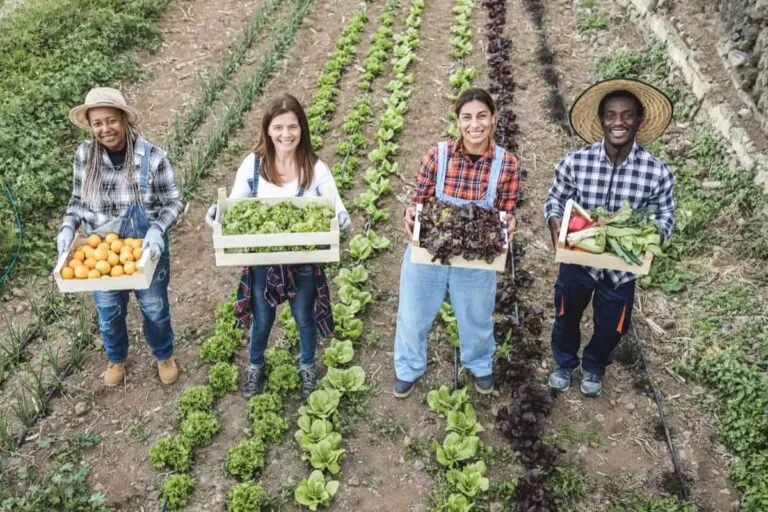
Photo: men working together in rural workshop cooperative small town America, via www.agrifarming.in
The Problem No One Campaigns On
Drive through the small towns of eastern Kentucky, the high plains of Nebraska, or the timber country of northern Maine, and a familiar story reveals itself in the storefronts. Closed hardware stores. Empty lots where manufacturing plants once stood. Diners that serve half the customers they did a generation ago. Regional economic decline is not a new headline, but the human cost—particularly for working-age men whose identities are deeply tied to productive labor—has rarely been examined with the seriousness it deserves.
What has largely escaped media attention, however, is the countermovement quietly taking shape in many of those same communities. Across the country, men are organizing themselves into cooperatives, business roundtables, and informal skill-sharing networks that are generating real economic outcomes without waiting for a government grant or a corporate relocation announcement. This is civic action in its most fundamental form: men identifying a problem, pooling their resources, and building something durable.
What These Networks Actually Look Like
The structures vary widely, but the underlying logic is consistent. In Harlan County, Kentucky, a group of former coal industry workers launched a cooperative woodworking shop in 2021 after recognizing that the region's timber resources were underutilized and that several of them held carpentry skills developed over decades. Today, the cooperative employs eleven men full-time and sells custom furniture to buyers as far away as Chicago and Atlanta. The members rotate management responsibilities, share profits according to hours contributed, and reinvest a portion of quarterly earnings into apprenticeship slots for younger men in the county.
"We stopped waiting for someone to come in and save us," said one of the founding members, a 54-year-old former mine electrician. "We looked around at what we had—the skills, the timber, the space—and we just started."
In rural Montana, a men's business roundtable meets monthly in the back room of a feed supply store in a town of fewer than 2,000 residents. The group, which began as an informal gathering of ranchers and tradesmen, now functions as a peer advisory board for small business owners throughout the county. Members bring specific operational challenges to each meeting—cash flow management, equipment financing, hiring—and the group works through solutions collectively. Several participants credit the roundtable with helping them survive the economic disruptions of the past several years.
Skill-sharing networks represent yet another model. In rural Georgia and the Carolinas, men's groups organized through local churches and community centers have established what participants call "trade circles"—regular gatherings where members teach one another practical skills: electrical work, welding, small engine repair, basic accounting, digital marketing. The knowledge transfer is horizontal rather than hierarchical, and participation costs nothing beyond time and commitment.
Why Men Are Driving This Particular Movement
It would be a mistake to frame this phenomenon as exclusively male simply because men happen to be involved. The more accurate observation is that these networks are forming in communities where men have experienced a specific and acute form of economic displacement—the loss of industries that once defined masculine identity and provided stable livelihoods across generations. When a coal mine closes or a paper mill shuts down, the ripple effects are felt by entire families and communities. But for many men, the psychological dimension of that loss is compounded by a sense that their particular form of contribution—physical, skilled, rooted in place—is no longer valued by the broader economy.
Peer-organized networks offer something that retraining programs and workforce development agencies often cannot: legitimacy. When a man learns a new skill from someone he respects—a neighbor, a former colleague, a man who has navigated similar circumstances—the learning carries a different weight. The social dimension of these networks is not incidental to their economic function. It is central to it.
Research on male social behavior consistently finds that men are more likely to seek and accept help when it is embedded in a context of mutual contribution rather than charity. Cooperatives and roundtables provide exactly that context. Every member is both a contributor and a beneficiary, which preserves dignity while enabling genuine support.
Measuring What Gets Built
Quantifying the economic impact of informal networks is inherently difficult, but some indicators are instructive. A 2023 survey conducted by a rural development nonprofit in Appalachia found that men who participated in peer business networks were 34 percent more likely to maintain business operations through economic downturns than those who operated in isolation. Separate research from agricultural extension programs in the Midwest suggests that farmers who participate in structured peer advisory groups consistently outperform their non-participating counterparts on key financial metrics.
Beyond the numbers, the qualitative outcomes are significant. Communities with active men's economic networks report stronger social cohesion, lower rates of workforce departure among young men, and more robust participation in local civic institutions. When men have economic stakes in their communities, they invest in those communities in other ways as well.
What Larger Organizations Can Learn
For advocacy organizations like Join 1 Million Men, the emergence of these grassroots economic networks carries an important lesson. Civic engagement does not begin with a voter registration drive or a town hall meeting. For many men—particularly those in rural and economically distressed communities—it begins with something more immediate: the question of whether they can build a livelihood in the place they call home.
Organizations that want to mobilize men around civic participation would be wise to meet them at that intersection. Supporting the formation of cooperatives, facilitating connections between men's business networks across regions, and advocating for policy environments that make small-scale collective enterprise viable are all forms of civic action. They are also, in many rural communities, the forms of action that men find most meaningful and most accessible.
The Work Ahead
The networks described here are not solutions to the full complexity of rural economic decline. They cannot replace the institutional investment and policy reform that many of these communities genuinely need. What they represent, however, is proof that men organized around shared purpose and mutual accountability can generate meaningful economic and social outcomes without waiting for external rescue.
That is not a small thing. In communities where cynicism about institutions runs deep and the memory of broken promises is long, the act of building something real—a cooperative, a roundtable, a trade circle—is itself a form of civic renewal. It is men saying, collectively, that they intend to remain, to contribute, and to build.
One million men doing that work, in towns and counties across this country, would constitute a transformation. The networks already forming suggest that the foundation is there. The question is whether the broader movement will recognize and amplify what is already growing.