Where the Movement Actually Starts: Poker Tables, Deer Stands, and the New Geography of Advocacy
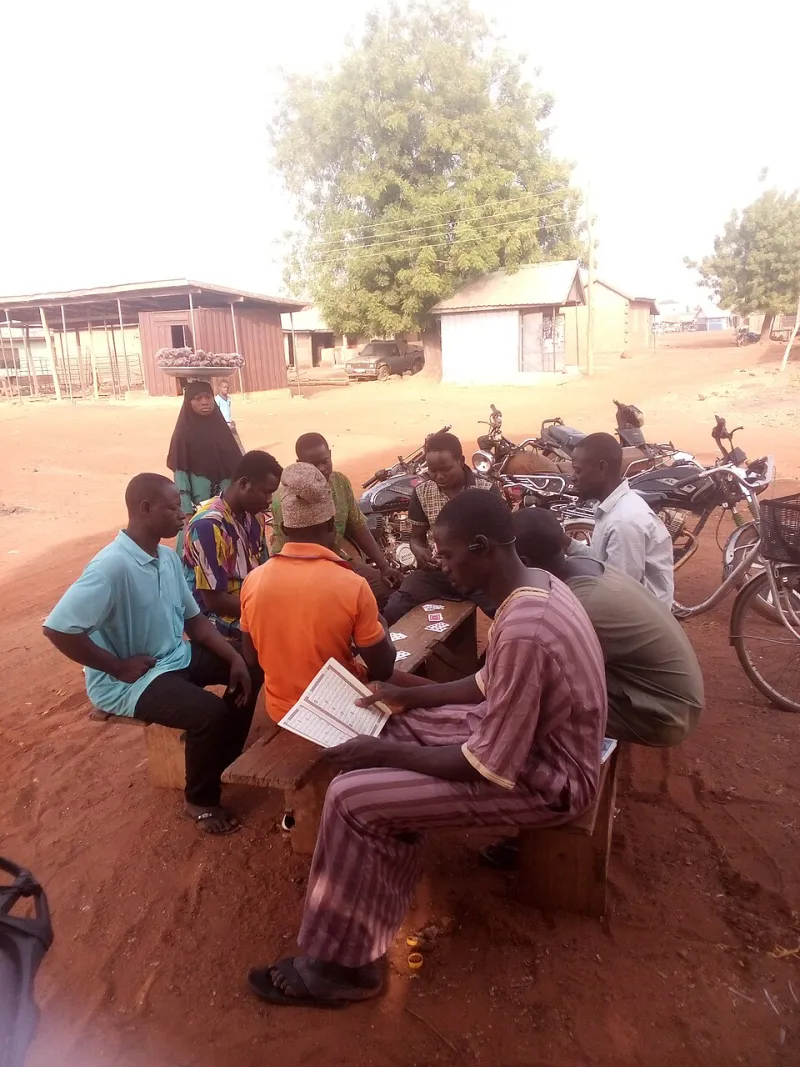
Photo: Alhassan Musah Amk, CC BY-SA 4.0, via Wikimedia Commons
Every significant reform movement in American history has an origin story, and the origin stories are rarely what the textbooks suggest. They involve kitchens, lodge halls, union break rooms, church basements—places where people who already trusted each other decided to act together. The formal organizations came later. The trust came first.
Which raises a question the advocacy industry prefers not to ask: if trust is the raw material of movements, why does so much organizing energy get spent in places where trust does not exist?
The Most Trusted Rooms in America
Think about where American men actually let their guard down. The Thursday poker game. The opening morning of deer season. The bass boat at first light. The garage where a transmission is coming apart alongside the conversation. These are not political spaces in any official sense, and that is precisely their value. Nobody is performing. Nobody is recruiting. The relationships are old, tested, and voluntary.
Sociologists have a term for these bonds—weak ties become strong through repeated, low-stakes contact—but the men in these rooms would use a plainer word: friendship. And friendship, it turns out, is the scarcest resource in modern civic life. Studies of social isolation keep confirming what many men already feel: the average American man's circle of confidants has been shrinking for decades.
The rooms where men still have confidants are, in other words, the last unsurrendered territory of social connection. They are also, almost entirely, unorganized.
Why the Garage Beats the Gala
There is a reason a plan hatched among friends survives contact with reality better than a plan handed down from a national office. The men at the card table know the local judge, the county road situation, and which neighbor will help in a pinch. Their knowledge is granular and current. A headquarters staffer, however well-intentioned, is working from a spreadsheet.
Informal gatherings also solve the recruitment problem that plagues every civic organization. Nobody at a poker night had to be persuaded to attend. The barrier to entry was a chair and a handshake. Movements built from such rooms inherit that low-friction quality: they recruit through existing relationships rather than cold outreach, and they retain through loyalty rather than newsletters.
A Blueprint for Turning the Group Into a Force
None of this argues for turning every hunting camp into a political committee. It argues for a modest, deliberate bridge between the two. A workable sequence looks like this:
1. Name the grievance. At some gathering, ask a simple question: what in this town or county genuinely needs fixing? Let the answers surface naturally. Usually one issue generates more heat than the rest.
2. Assign one man to learn the machinery. Not everyone. One. His job is to find out which body governs the issue, when it meets, and how ordinary citizens get standing to speak.
3. Show up as a group, once. A single meeting with eight familiar local faces in the audience changes the calculus of any boardroom. Officials count bodies. Eight is a number.
4. Keep the hobby sacred. The genius of the model is that the poker game stays a poker game. The advocacy is a byproduct of the friendship, not a replacement for it. Groups that invert this order lose both.
5. Add one outsider per season. Growth comes from a friend bringing a friend, not from public advertising. Slow, trust-based expansion is the feature, not the bug.
The Larger Claim
The conventional wisdom holds that America's civic decline is a problem of membership—of institutions failing to attract people. But for men, the truer diagnosis may be a mismatch: the country is rich in male gathering places and poor in mechanisms for converting them into public power. The bridge between the two is not an app, a pledge, or a campaign. It is a conversation that starts with "somebody ought to do something about that" and ends with a date on a calendar.
A million men already meet every week in garages, blinds, boats, and backyards. They already trust each other. They already know what is broken. All that remains is to stop treating those rooms as escapes from civic life and start treating them as its foundations.