Whistles and Values: Why Youth Sports Coaches Are the Civic Leaders America Forgot It Had
The Most Trusted Man in the Gymnasium
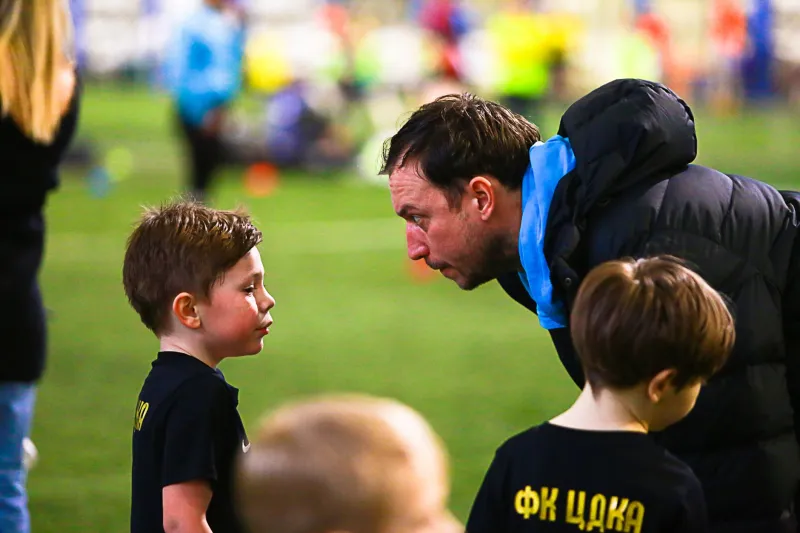
Consider the reach of a single youth sports coach. Over the course of a season, he spends more structured, face-to-face time with the young men and women on his roster than most teachers, counselors, or community leaders ever will. He earns that time not through institutional authority but through demonstrated investment—early mornings, long weekends, and the kind of patient, repetitive guidance that builds character incrementally.
There are an estimated 6.5 million youth sports coaches active across the United States at any given time. The overwhelming majority are volunteers. Many are fathers. Nearly all of them are regarded by the children they coach as figures of genuine significance. And yet, as a nation, we have never seriously asked what this extraordinary network of trusted men could accomplish beyond the scoreboard.
That question deserves a serious answer.
More Than a Game Plan
The civic potential embedded in youth sports is not theoretical. Every practice session is, in structural terms, a rehearsal for democratic life. Coaches arbitrate disputes. They establish norms of fairness and consequence. They ask young people to subordinate individual ambition to collective purpose, to show up reliably, to hold themselves accountable to standards they did not set. These are not athletic skills. They are civic ones.
The problem is not that coaches lack influence. The problem is that neither coaches nor communities have been encouraged to name that influence for what it is. When a coach pulls a player aside to address dishonest behavior, he is modeling civic accountability. When he insists that a team clean up after itself following a tournament, he is reinforcing communal responsibility. When he mediates a conflict between two teenagers from different neighborhoods, he is performing the work of democratic cohesion. None of these moments require a lesson plan. They require only intentionality.
Join 1 Million Men believes that intentionality is the missing variable—and that men are uniquely positioned to supply it.
The Trust That No Politician Can Purchase
Public trust in American institutions has declined sharply over the past two decades. Confidence in Congress, the media, and even local government has eroded in ways that concern civic observers across the political spectrum. Against this backdrop, the informal trust that youth coaches command stands out as something genuinely rare.
Parents hand their children over to these men twice a week. They do so not because of credentials or titles but because of observed character and demonstrated commitment. That level of relational trust is an asset of immense civic value—and it is being left almost entirely on the table.
Imagine instead a youth basketball coach who, during a post-game debrief, briefly discusses the upcoming city council vote on park funding. He does not advocate for a position. He simply notes that the parks his players use every Saturday exist because previous generations showed up to make decisions about them. He asks his players whether they know who currently makes those decisions. That single conversation, repeated across thousands of gyms and fields, would constitute one of the most effective civic education campaigns in American history.
Turning Presence into Purpose
The goal is not to transform coaches into political organizers or classroom instructors. It is to help them recognize and deploy the civic dimension that already exists within their role. Several practical pathways make this possible without adding burden to already-stretched volunteers.
Modeling civic vocabulary. Language shapes perception. Coaches who routinely use terms like community responsibility, shared stakes, and collective outcome are quietly building a vocabulary of civic engagement in young minds. This costs nothing and requires no curriculum.
Connecting team values to neighborhood realities. A coach who organizes a single annual service event—cleaning a local park, visiting a veterans' facility, collecting equipment for underserved youth programs—anchors the abstract values of the sport to the concrete life of the community. The lesson is experiential and durable.
Hosting informed conversations about local issues. This does not mean debate or advocacy. It means occasionally noting, with the same matter-of-fact tone a coach uses to discuss a zone defense, that local decisions have local consequences. Zoning changes, school board elections, and public infrastructure votes all directly affect the spaces and resources that youth sports depend upon. Coaches who name that connection are performing genuine civic education.
Encouraging civic participation among parents. Coaches occupy a convening role that extends beyond their players. Parents gather regularly on the sidelines of games and practices, forming one of the most consistent community assemblies in American civic life. A coach who occasionally directs that assembled community toward a local volunteer opportunity or a public meeting is leveraging an existing network for collective good.
The Men Who Are Already Doing It
Across the country, individual coaches have discovered this potential on their own. A football coach in rural Georgia began taking his players to city council meetings once per season, not to testify but simply to observe. He wanted them to see that the people making decisions about their community were ordinary men and women, not distant figures. Several of his former players later ran for local office.
A youth soccer coach in suburban Ohio made it a team tradition to volunteer at the local food bank during the off-season. He never framed it as a political act. He called it simply what teammates do for each other's neighborhood. The tradition has continued for eleven years, long after he retired from coaching.
These men did not attend civic training seminars. They acted from an intuitive understanding that their position carried obligations beyond winning. What they lacked was a framework, a language, and a community of peers who shared that understanding. That is precisely what Join 1 Million Men exists to provide.
A Call to the Men on the Sideline
If you are one of the millions of men who volunteer your time as a youth sports coach, you already possess something extraordinary: the earned trust of young people who are actively forming their understanding of what it means to be a member of a community. That trust is not incidental to your role. It is the most significant dimension of it.
America does not need coaches to become politicians or activists. It needs coaches to become conscious of the civic formation that is already occurring in their presence—and to lean into it with the same deliberate care they bring to a fourth-quarter game plan.
The sideline has always been a place where character is shaped. It is time to acknowledge that civic character is shaped there too, and to act accordingly. One million men who coach, who mentor, who show up—that is not merely a sports story. That is the foundation of a functioning democracy.