Disconnected No More: How Men Are Finding Brotherhood—and Purpose—Through Civic Life

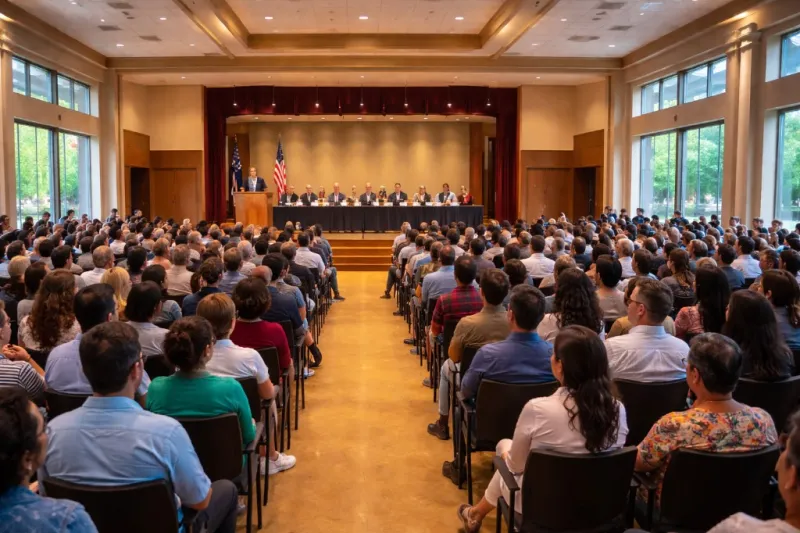
Photo: Ganesh Mohan T, CC BY-SA 4.0, via Wikimedia Commons
Something is quietly breaking down in the lives of American men. Not loudly, not dramatically—but steadily, in the spaces between the workday and the weekend, in the absence of a phone call that never comes, in the dinner table that seats one. Researchers have begun calling it an epidemic. Psychologists are sounding alarms. And yet, for millions of men across this country, the experience of profound social isolation remains something they endure in silence, without a name for it and without a way out.
The data is unambiguous. A 2021 Survey Center on American Life report found that the share of men with no close friends has quintupled since 1990—rising from 3 percent to 15 percent. Men are less likely than women to maintain close friendships, less likely to seek emotional support, and more likely to report feeling that no one truly knows them. The consequences extend well beyond emotional discomfort. Chronic loneliness is now linked to elevated risks of heart disease, cognitive decline, and premature death. Surgeon General Dr. Vivek Murthy has described social isolation as a public health crisis comparable in severity to smoking.
For men, the crisis runs especially deep—and the solutions, it turns out, may be hiding in plain sight.
The Particular Silence of Men
Men in America are socialized, from an early age, to project self-sufficiency. Asking for help—emotional, social, or otherwise—runs against deeply ingrained cultural scripts. Friendships that once formed naturally through school, the military, or early career environments tend to thin out with marriage, parenthood, and geographic mobility. By middle age, many men find that the scaffolding of their social world has quietly collapsed around them.
Dr. Richard Schwartz, a Harvard Medical School psychiatrist who has studied male loneliness extensively, has described the condition as one of the most underacknowledged mental health crises of our time. "Men often don't realize how isolated they've become until something forces the recognition," he told researchers in a widely cited interview. "And by then, the patterns of withdrawal can be deeply entrenched."
What makes civic participation a particularly compelling intervention is not simply that it brings men into proximity with others. It is that it does so through structured, purposeful activity—a context that aligns naturally with the way many men form and sustain meaningful connection.
Why Civic Life Works Where Other Interventions Fall Short
Therapy, self-help, and wellness culture have all been offered as answers to the male loneliness crisis. Each carries genuine merit. But they also carry barriers that many men—particularly working-class and middle-aged men outside major urban centers—find difficult to overcome. The cultural stigma around seeking help remains real. The cost of professional support is prohibitive for many. And passive consumption of content, however enriching, does not produce the social bonds that human beings require.
Civic participation operates differently. It provides a reason to show up that is external to oneself—a meeting to attend, a neighborhood project to complete, a candidate to support, a community garden to plant. The purpose comes first; the relationship follows naturally from shared effort. Researchers in social psychology have long recognized this dynamic. Psychologist Jonathan Haidt, in his work on moral community and belonging, describes the experience of working toward a common goal as one of the most reliable pathways to what he calls "hive psychology"—the deep sense of collective identity and mutual loyalty that gives life meaning beyond the individual.
For men in particular, this task-oriented pathway to connection is not a workaround. It is, for many, the most authentic route available.
Voices From the Movement
Marco, 47, a retired electrician from outside Columbus, Ohio, describes the two years following his divorce as the loneliest of his life. "I had acquaintances, people I'd wave to. But nobody I could actually call." A neighbor eventually pulled him into a local civic association working to revitalize a shuttered community center. Within months, he was attending weekly planning meetings, coordinating volunteer shifts, and—without fully realizing it—building the most substantive friendships of his adult life.
"These guys knew what I was going through," Marco says. "Not because I told them. Because they were going through it too. And we were doing something real together. That changes things."
His experience is not unusual. Across the country, men who have entered civic life through neighborhood associations, city council engagement, volunteer fire departments, youth sports leagues, and local advocacy organizations report strikingly similar transformations. The initial draw is almost never connection itself—it is purpose, utility, the desire to contribute. But connection is what endures.
DeShawn, 52, a high school history teacher in Memphis, Tennessee, began attending city planning meetings three years ago out of frustration over infrastructure neglect in his district. He came alone. He returned because of the men he met. "There's something about being in a room with other guys who give a damn about the same things you do," he says. "It sounds simple. But it's not something I had before, not as an adult."
Structured Belonging in an Atomized Age
Sociologists distinguish between what they call "weak ties"—the casual acquaintances and passing interactions that make up much of modern social life—and "strong ties," the deep relationships characterized by trust, reciprocity, and genuine mutual investment. American life has grown extraordinarily efficient at producing weak ties and devastatingly poor at cultivating strong ones.
Civic institutions, at their best, are engines of strong-tie formation. They require consistent presence, shared accountability, and investment in outcomes that extend beyond any single individual. These are precisely the conditions under which lasting bonds are forged. And men who enter them—even reluctantly, even skeptically—often find that the structure of civic life provides what unstructured socializing rarely delivers.
This is the deeper argument for civic engagement as a response to the male loneliness epidemic. It is not simply that joining a group keeps men busy. It is that the particular character of civic work—its demands, its stakes, its orientation toward something larger than the self—creates the conditions for the kind of belonging that human beings, and men especially, most need.
The Invitation
The loneliness crisis among American men will not resolve itself. The cultural forces driving it—geographic mobility, the decline of institutional life, the atomizing effects of digital technology—are not reversing course. What can change is the individual decision to step forward, to claim a seat at the table of civic life, to show up not merely for the cause but for the community that forms around it.
At Join 1 Million Men, we believe that the path toward a stronger, more connected America runs directly through the civic choices of individual men. Not because civic engagement is a cure for every ill, but because it is one of the most reliable ways that men have ever found to matter to one another—and to the places they call home.
The research is clear. The stories are real. And the invitation is open. The question is whether you will accept it.